
introduction
Although motivation is frequently viewed as the key to achieving success, it tends to be erratic and transient. While some days have high levels of motivation, you may find that other days you don’t have any motivation at all.
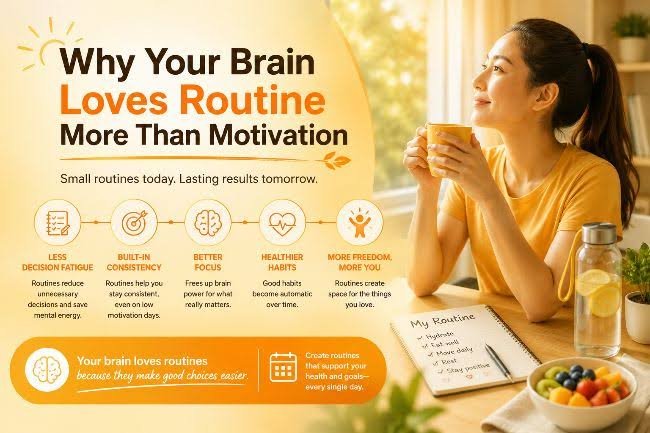
Creating a daily routine provides a structure for your day that is not based upon the level of energy or the mood you are in. A well-established daily routine allows you to remain focused on your discipline, keep your attention on the completion of tasks, and remain productive when motivation begins to wane.
Habits can arise from a daily routine, which means that you do not waste so much time deciding what action to take due to having an established routine; this means that you will also expend less mental effort.
Over time, the practice of developing a consistent daily routine will help you develop steady progression, develop stronger self-control, and aid in accomplishing long-range objectives.
Building a sustainable daily routine based on a better understanding of why routines are superior to motivation will enable the development of long-lasting habits, keep you consistently productive, and ultimately lead you to achieve all of your goals.
Motivation Myth
“The Motivation Myth” is Jeff Haden’s book that makes the case that motivation comes from achieving small, consistent successes rather than being a prerequisite for getting started.
Jeff Haden’s book supports the idea that you will not attain your greatest accomplishment unless you feel motivated and have an actionable plan to help you succeed by implementing a process of hard work and establishing good habits.
Motivation is NOT a prerequisite for success; it is only one of many things that people go through on their journey to achieve success.
Motivation is an emotional feeling; consequently, you cannot depend on that feeling for long-term consistency. In fact, to attain true success, the key is to create a clearly defined, repeatable process and implement small, consistent habits in your daily routine.
Key Concepts
Motivation results from taking action and achieving small successful outcomes, which releases dopamine and further encourages you to continue taking action, and therefore creates a continuous feedback loop that drives motivation.
A successful process (the process of achieving a goal) and your goals are the same in that they lead you to achieve your desired success. After setting your goal, focus only on the steps you need to take daily to achieve that goal; forget about your goal during the day.
Power of Routine
The “Motivation Myth” is a book by Jeff Haden that proposes that one must not only be motivated prior to taking action; instead, motivation can be achieved through the consistent achievement of multiple small successes over time.
This book proposes an actionable plan for achieving success based on the principle that you can build your way up to success through a systematic approach to developing new habits, through devotion to your craft, and most importantly, through taking action towards achieving your goals daily.
Core Philosophy: Because motivation is an emotion that ebbs and flows, you cannot depend on it as the driving force behind your daily actions. Real success comes from creating, following, and refining a defined process along with developing daily repetitive habits.
Habit Consistency
Habit performance is following through on a habit/repeated experience consistently throughout time, thereby creating a routine by overcoming initial resistance so that performing that activity becomes an automatic response.
There are several common strategies that can help you maintain consistency with a habit:
Start small, track your progress, create supportive environments, use reminders, and allow yourself to have occasional setbacks (rather than viewing these instances as failures).
Habit Principles to Help Maintain Consistency:
Start Small & Gradually Increase: Start with very small, easily manageable actions (for example: read for 5 minutes) in order to establish a pattern of success and increase your confidence before moving on to perform actions with a higher intensity level.
Create Routines & Environments: Incorporate your habits into your daily routine/schedule and remove any barriers (such as having your workout clothes ready and waiting) that would make the performance of the action less likely.
Track Your Progress: Use a journal or app to record your streak of habit performance; this will serve as a motivational boost as well as an opportunity to reflect on the progress you have already made.
Be Flexible Rather Than Perfect: If you miss a habit performance for one day, do not give up; simply get back into it the following day. The need for perfection may slow progress, but consistency will improve it.
Accountability: A workout buddy or group of people you can work out with may be the motivation you need to keep going when your motivation is low.
Focus on the Action: Focus on the actions that you are taking each day rather than only fixating on the final result or end goal. Personal growth happens along the way during this journey as opposed to solely at the end.
Long-Term Benefits
The advantages that will be gained from long-term planning and/or investment (time) efforts will provide stability and help mitigate the issues that may arise from financial insecurity, poor health, lack of personal growth, and high levels of stress in the future.
Financial Security: By making regular contributions towards their savings goals, people can accumulate wealth, while individuals who work for a company for extended periods typically earn higher salaries, receive a retirement matching contribution, and benefit from a profit-sharing plan.
Health and Well-Being: Putting health first will not only help you avoid chronic diseases but also positively affect your mental state, result in a longer life, and improve your overall quality of life.
Strategic Focus: A long-range plan will help define goals, allocate resources appropriately, and ease future tension or uncertainty.
Recovery: Those with a strategic approach to problems tend to develop creative solutions and become more adaptable and successful over time.
In terms of Employment and Insurance:
Long-Term Disability Insurance: Disability insurance will replace a large percentage (between 50 and 70 percent) of your wages for extended periods resulting from an illness or injury and cover essential financial obligations and/or personal financial goals.
Employee Benefits: Employees who remain at their current jobs long enough may qualify for additional paid time off, salary increases, and enhanced retirement plans.
Building Strong Routines
Creating an effective and simple routine requires creating goals, developing good habits, and maintaining a positive attitude towards oneself.
In order to do this, it is vital to first create a list of daily habits that will help achieve the desired goals.
These habits may include working at specific times of day, eating healthy food, exercising regularly, taking care of yourself, and educating yourself.
Once a clear understanding of what is important has been established, then people need to create a calendar with a specific number of days in the week where they will devote blocks of time for daily activities.
By starting out small and slowly adding additional habits to the existing ones, people are able to successfully create long-term habits.
Creating and maintaining a successful routine will ultimately lead to increased productivity, decreased anxiety, and personal/professional development. It is extremely important to stay consistent and always follow through with established habits or routines.
To continue progressing with the creation of new habits, be flexible and willing to modify an established plan if circumstances change or if there is already an established routine. Tracking progress and celebrating successes creates an added incentive to maintain momentum throughout the development of new habits.
Over a period of time, having a successful and healthy routine develops a feeling of stability and security, reduces stress, and enhances personal and professional development. By designing and maintaining a strong routine, individuals can have maximum productivity and focus and reach their goals in the most effective manner, while relying on the fluctuating nature of motivation.
Conclusion
Additionally, incremental action performed consistently over time will compound into substantial outcomes over time. Over an extended timeframe, the benefits of implementing and sustaining a daily routine include improved productivity and focus, emotional stability, and an overall sense of well-being.
The process of building a strong routine includes establishing priorities, establishing a structured schedule, minimizing potential distractions, maintaining flexibility as needed, and maintaining accountability for consistently executing these steps.
Understanding the effectiveness of routines decreases one’s reliance on transient forms of motivation while providing an opportunity to take intentional and ongoing actions to promote personal and professional development.
When one places a priority on establishing routines versus relying on fluctuating sources of motivation, one can achieve and sustain success while maintaining clarity of mind and creating a well-balanced, productive, and goal-oriented lifestyle.
Ultimately, the establishment of effective routines serves as the underpinning of ongoing progress and long-term positive change.