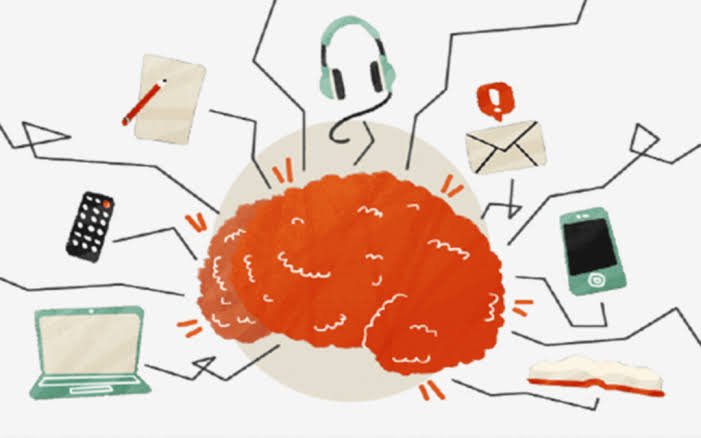

Introduction
In the current age, multitasking is a prevalent function in everyday life. There is, however, a large body of evidence showing that multitasking has an adverse effect on brain function. While it may give the impression of being more productive to perform several tasks at the same time, the brain does not perform well when trying to focus on more than one task at a time; constant task switching decreases concentration, short-term and long-term memory, and productivity level.
Increased instances of switching also create greater levels of mental fatigue and stress, which decrease efficiency and accuracy when performing tasks.
Understanding how multitasking affects your brain is critical to enhancing and improving your ability to concentrate on tasks, make sound decisions, and perform cognitively. By being aware of the limitations of multitasking, you can implement techniques that will allow you to focus better and create greater clarity of thought.
Myth of Multitasking
People have long believed that humans can perform multiple complex tasks at once and excel when doing so—this is known as the “multitasking myth.”
However, this is not true. The way that your brain works means that instead of completing two tasks simultaneously, it will rapidly bounce back and forth between them. This switching process takes mental power and often results in additional errors, so therefore it makes you less productive than if you had just focused on one task at a time, also known as “monotasking.”
What Occurs When You Switch Between Tasks (Switch Tasking)
Rapid Task Switching: Your brain does not perform both Task A and Task B at the same time. Your brain is switching back and forth between the two tasks.
Switching Cost: Each time you switch from one task to another, you lose mental time because of the effort involved in switching. NeuroLeadership Institute estimates that this takes approximately 25% or more of your time and reduces the quality of your output.
Cognitive Drain: This task-switching process increases the burden on your working memory, diminishes the effectiveness of your prefrontal cortex (an area of your brain that helps you make decisions), and decreases your ability to filter out distractions and other information that is not relevant to a specific task.
Why Juggling Tasks Feels Like You’re Being Productive
The Illusion of Progress: When you are juggling multiple tasks (like emails and meetings), it creates an illusion of productivity and creates a sense of accomplishment and power.
Habit and the Environment: Because we live in a constantly evolving, notification-driven world (and employ many tools that support this type of behavior), we may unconsciously develop habits of multitasking because it is something we are encouraged to do by our environment.
Brain Switching Cost
The costs associated with task switching are due to:
Task switching costs, or “brain switching costs,” refer to the ways in which one’s ability to focus on a given task is hindered by moving back and forth between multiple tasks. The human brain cannot perform more than one activity simultaneously. This is because the brain must perform a series of mental actions when switching between tasks, which adds a workload to both tasks each time a switch occurs.
Loss of time: It takes on average 15-23 minutes for the brain to return to its original level of deep focus after being interrupted while engaged in a task.
Increasing likelihood of making an error: Due to the incomplete cognitive transfer of information when completing a task, the chances of error are increased when switching from task to task. In addition, the brain is less capable of filtering out irrelevant information.
Increased mental fatigue: Frequent task switching continually depletes the brain’s available energy resources (i.e., oxygenated glucose), resulting in fatigue, stress, and impairment of memory retention.
Reduced productivity: Productivity can be decreased by as much as 40% when switching between tasks, as opposed to focusing on one task at a time.
Research studies on the cost of switching between tasks by psychologist Arthur T. Jersild in 1927 revealed that even small delays (in tenths of a second) in switching when performing multiple tasks contributed to substantial productivity losses.
The brain’s frontal lobe and parietal lobe are the primary areas of the brain responsible for facilitating the process of executive functions needed to manage cognitive switching between tasks.
Focus Loss
The term “focus loss” refers to your inability to give your complete attention to a particular task. There are many environmental components, as well as psychological sources and medical conditions, that can lead to a loss of concentration.
The most common environmental and lifestyle factors leading to focus loss are lack of sleep, stress, poor diet (high in sugary foods), lack of physical activity, multitasking, and Cluttered or noisy workspaces.
Psychological issues, including anxiety, depression, grief, and mental fatigue, will all impact upon your ability to maintain concentration.
Medical conditions, as well as medications prescribed for these medical conditions, will also affect your ability to maintain your focus on a task.
Possible medical conditions include Attention Deficit Hyperactivity Disorder (ADHD), Chronic Fatigue Syndrome (CFS), Dementia, and Hormonal Imbalances. A side effect of certain types of medication may also include problems with concentration.
Single-Tasking Benefits
The following are some advantages for the year 2025:
Increased Efficiency—Performing tasks one at a time reduces the need to “switch” between activities, thus saving up to 40 percent of productive time that would usually be lost to switching.
Less Stress—Focusing on a single project helps to minimize cognitive overload and protect from the stress that comes with having to meet multiple deadlines.
Higher Quality Work—When there is deep concentration, errors are reduced and more detail can be given to a project, resulting in a more thorough and accurate work product.
Entering a Flow State—By focusing on a single task, it is easier for some people to enter into a flow state where they find it easy to be creative and produce work effortlessly.
Eliminating Distractions to Strengthen Focus—Continuous practice of single-tasking acts as a circuit training for our brain and allows for a gradual rebuilding of our attention span that has been damaged by constant digital distractions.
Conserving Mental Energy—The brain utilizes approximately 20 percent of our total daily energy.
When an individual does not have to constantly “refocus” their energy due to having multiple projects/deadlines, they can save that mental energy for much more complex reasoning and problem-solving.
Improving Concentration
In order to enhance concentration, it is important to reduce any distractions. This can be accomplished by utilizing time-blocking strategies such as the Pomodoro Technique (which involves periods of concentrated activity followed by rest breaks), getting enough sleep (7-9 hours of sleep) and getting regular exercise, eating foods that promote brain function (the Mediterranean-style diet), and engaging in mindfulness or meditation to train concentration.
Breaking down tasks into smaller steps also allows you to develop a workspace dedicated to concentrating on a single task. It can dramatically improve your ability to concentrate for long periods of time on one task.
The Mindset and Environment
Minimizing distractions: eliminate your mobile phone and all other audio distractions, clear off any clutter, and make sure that you have a designated place to work free from all distractions.
Single-Tasking: focus on one thing at a time rather than trying to do multiple things at once. Focus on a singular activity for maximum effectiveness.
Establish Goals: set clear, specific, and measurable goals for yourself to create motivation and technical direction.
Practicing mindfulness: By practicing daily meditation, you train your brain to stay focused and present in the “now.”
Techniques & Habits
Pomodoro Method: Work in short bursts (e.g., 25 minutes) followed by short breaks (e.g., 5 minutes).
Rest: It is important to take breaks to recharge your ability to maintain focus.
Brain Training: Participate in brain-training activities like puzzles (Sudoku) and reading books that challenge your mind.
Journaling: Put to paper all thoughts that come to mind.
Conclusion
In conclusion, to improve brain function and reduce the negative effects of multitasking, we can use a combination of the following techniques: prioritizing single-tasking, strategically pairing tasks together, and taking breaks in a structured way. It is impossible to generate true simultaneous processing of highly complex tasks by the human brain. The brain will engage in a rapid, inefficient manner of switching back and forth between complex tasks, causing an increase in errors, stress, and mental fatigue.
Focus and Performance Improvement Strategies Include:
Prioritize Single-Tasking: By focusing solely on your most important or complex task (for example, studying or solving complex problems, driving), you can give it your undivided attention.
Eliminate Distractions: To actively reduce distractions and interruptions, set times when you will check for new messages or notifications from email/social media accounts, purchase noise-cancellers, and turn off all vibrations/alerts that are non-essential.
Follow the “20-Minute Rule”: For intense concentration, work in uninterrupted 20-45 minute intervals; then take a brief break to avoid mental fatigue and overload.
Batch Together Similar Tasks: To minimize the cognitive overload of having to constantly switch between different types of activities, group similar tasks together (for example, answering all emails at the same time).