
Introduction
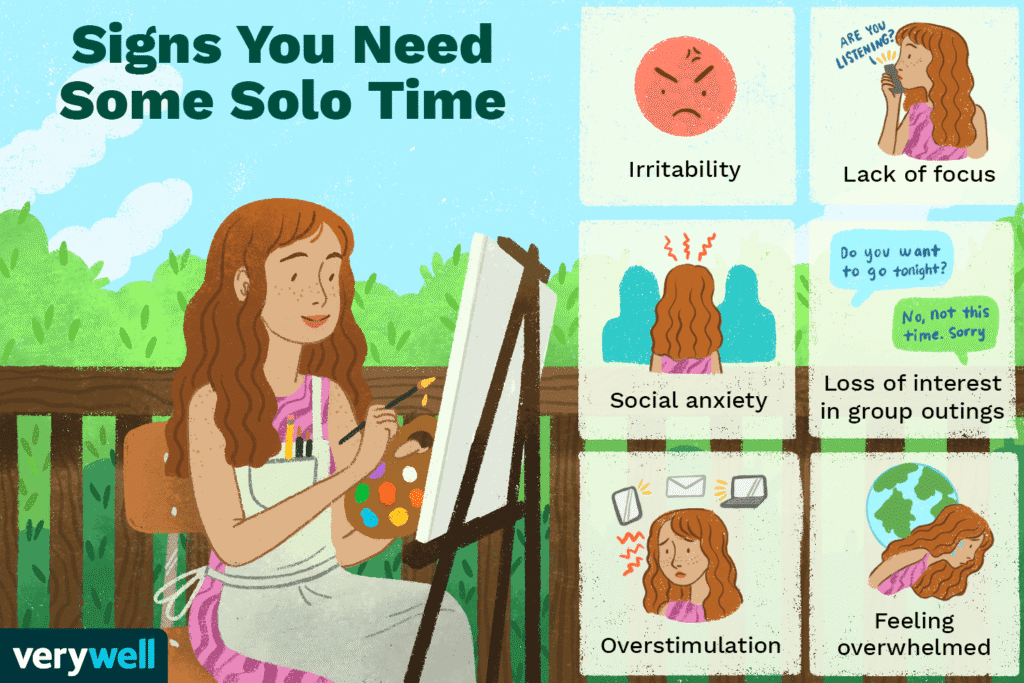
Our busy lives are very chaotic. When we have too many sounds, emails/texts, and people pulling at us, it usually causes us to lose focus and not know what we should be working towards. One of the things we should be doing is taking time out of our day for “intention” or “deliberate” silence and “alone” time. Using these times to recharge emotionally is critical to being able to remain calm and focused and less stressed.
When we take time to be alone and quiet, our brain has the opportunity to think about things and to have time to think and reflect. This time will provide the brain with “rest” so that there isn’t so much clutter in the brain; it may accumulate to the point that the brain will become fatigued, unable to maintain focus, and unable to remain productive.
Alone time is not about being isolated from other people. Alone time is an effective way to utilize the mental reset and to improve focus and decision-making and to overall improve emotional health.
This article is designed to show you how to find ways to use silence, solitude, and reflection in your life. By doing so, it will help you maintain a strong mind that is calm, focused, and able to withstand life’s challenges.
Noise Overload
Auditory sensory overload, or noise overload, is a condition wherein an individual experiences a significant quantity of auditory input that overwhelms the brain’s ability to process that sound. This overload creates difficulty with focus, anxiety, irritability, or what we may refer to as “meltdowns.”
Meltdowns are common in people with autism or ADHD; however, anyone can experience them. This auditory overload can occur when exposed to very loud sounds, multiple sounds simultaneously, and other unexpected sounds—and can be easily prevented by removing the source of the noise, using earplugs, or through relaxation techniques.
An auditory sensory overload is essentially a sensory processing jam, like a traffic jam for auditory input; a person who suffers from this type of overload is to be considered a victim of their environment, not someone suffering from bad behavior.
Auditory overload can trigger fight, flight, or freeze responses in the same manner as when an individual is in danger from an approaching predator or environmental threat.
Here are some of the most common triggers of this type of auditory overload:
Loud and chaotic environments: concerts, busy cafés, and shopping malls are all common examples.
Simultaneous multiple sounds: Simultaneous conversations, music being played, and various clattering noises in busy places create auditory overload.
Sudden, unexpected sounds, such as sirens, fire alarms, and phone rings, create auditory overload.
Repetitive sounds: Sounds created by appliances (air conditioners, microwave ovens), buzzing lights, etc., create auditory overload.
Certain harsh sounds, like hand dryers, blenders, and vacuum cleaners, create auditory overload.
Psychology of Silence
Introspection and self-awareness occur in silence because silence acts as a barrier against external distractions, enabling us to access our brain’s default mode network (DMN) to think, recall memories, and discover who we are.
Emotional Regulation: By using silence to diffuse heated discussions, we can avoid saying things we later regret and respond with thoughtful control instead, demonstrating strength of emotion.
Mental Benefits: A slow pace gives us time to de-stress, concentrate on what is important, and stimulate the ability to see a clear way to a solution in decision-making.
Silent practices associated with meditation and therapeutic interventions provide individuals with insights and help them heal from the emotional wounds of life by allowing them to tap into their inner wisdom.
Benefits of Solitude
Spending time in solitude has many advantages. Voluntary solitude provides an opportunity for relief from stress, increased creativity, and improved awareness of self and how to cope with life’s trials and tribulations. It is an opportunity for you to disconnect from everything and rejuvenate your physical and mental states.
Benefits of Voluntary Solitude:
Decreased Stressors Being by yourself gives you the opportunity to process many stress hormones, such as cortisol. As you take time for solitude, your stress hormones are decreased and your nervous system calms down.
Increase in Creative Productivity. Time alone allows you to freely think outside the box, delve into new ideas, and achieve flow states (deep focus).
Improved Awareness of Oneself. Solitude allows you to think about your thoughts, emotions, values, and goals on your own without any outside forces interfering with your thoughts and feelings.
Greater Control of Emotions. When you are taking time for solitude to deal with your feelings on your own, you are developing your ability to cope with your emotions on your own, which increases your level of resilience.
Better Relationships. When you are taking time for solitude and learning your needs and boundaries more clearly, it is much easier for you to be present and supportive in your relationships with others.
Greater Independence. When you rely on yourself for comfort and inspiration, you become more self-sufficient and confident and have a greater sense of worth.
Daily Quiet Rituals
Quiet daily rituals can provide a sense of calmness, awareness and intention through consistency and small yet intentional actions. Examples include: Meditation (sitting peacefully); Journaling (writing about your day); Mindful walking (taking a walk while being present); Drinking coffee/tea; all done silently.
Morning Ritual Suggestions
Awareness Morning: Take time for yourself, drink your coffee/tea, listen to music, or sit quietly with your eyes closed and listen to your breathing.
Gratitude and Intention: Write down what you’re grateful for today and write yourself a simple goal or intention for the day.
Gentle Movement: Move your body gently, stretch, and/or practice yoga to raise your mood.
Digital Cleanse: Allow yourself one hour from waking to the time you check email, texts, or any other screen device.
Mental Clarity Effects
The effects of mindful solitude and quietness on mental clarity are immediate and incomparable to that achieved by the multitude of constant distractions that normally bombard us. Only when we cease experiencing outside stimulation do we notice how poorly we were processing our cognitive load through improper thought focus. Once we have found a little peace through solitude, our ability to process cognitive load improves exponentially, allowing us to concentrate and make good decisions much better than before.
The primary mental clarity benefits are
Greater Clarity of Thought and Focus—The fewer distractions allow the brain to concentrate exclusively on the matter at hand.
Better Solution Creation—In a state of quiet reflection, our thought processes are much clearer and allow us to develop better solutions than we would have been able to come up with during the times when we had so many other distractions.
Less emotional clutter and impulsivity—taking time to reflect on yourself helps you to regulate your emotional state, thereby minimizing impulsive behaviors and thoughts through greater self-control.
Superior memory retention and recall—your mind can hold on to and recall memories more effectively when there is peace and tranquility in your mind. Less Stress—The absorption of Peace through the absence of distraction will lower your levels of Stress Hormones in Your Body and give Your Brain time to recover from cognitive overloading.
Conclusion
When we take time for quietness and solitude, we allow our minds to recuperate from being overwhelmed by stimuli. Quietness allows our brains time to consolidate memories, process information, and build up their ability to pay attention so they can concentrate and solve problems more effectively.
Being alone is also helpful for managing your emotions. Alone time is an opportunity to be free of the expectations of others, providing an environment to think through and address your feelings, creating more stability for your emotional well-being.
Additionally, tranquillity allows us to reflect on ourselves. A person who spends time by themselves can better identify their own needs, values, and goals, which is essential for developing as an individual and maintaining a strong sense of self.