
Introduction
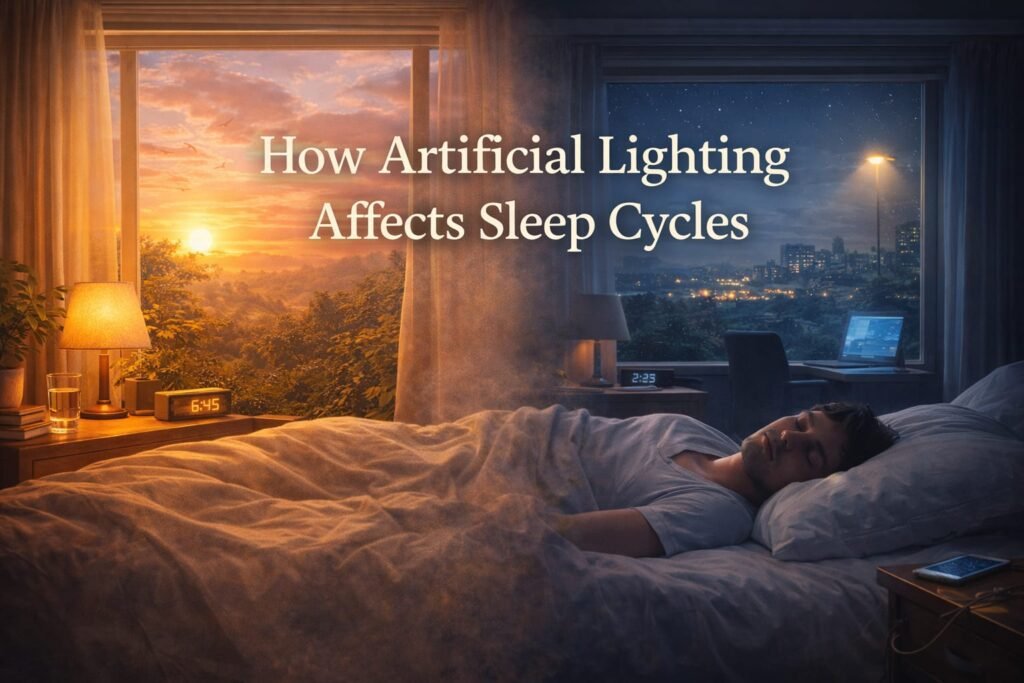
The pervasive use of artificial light in today’s society is not only commonplace, but it also plays a significant role in affecting sleep behaviors. Various types of artificial lighting are being used every day, from overhead lighting to smartphone displays to street lights, etc., and therefore artificial light is impacting our biologic clock and altering our biological sleep cycles (circadian rhythms), which may eventually lead to difficulty achieving adequate amounts of quality sleep along with feelings of fatigue upon waking from sleep.
Knowing what impact different types of artificial light have on sleeping cycles can be beneficial in making better choices regarding sleeping habits and protecting long-term healthy lifestyles.
Natural vs Artificial Light
Natural light (from the sun and stars) offers a complete spectrum (health benefits; vitamin D and improved mood) and has a dynamic nature; however, it is inconsistent. Artificial light (bulbs and LEDs) is controlled and reliable and provides consistent, therefore not dynamic (limited), spectrum lighting; effects vary according to mood and eye health unless the source is a full spectrum.
The primary differences between natural and artificial light
Include the origin of the source (natural source = from the sun; light source = man-made) and the spectrum of the light; the intensity of the source (natural light = variable intensity; artificial light = stationary intensity); and the benefits for health and mood (natural light = positive impact; artificial light = may cause negative impact).
Blue Light Exposure
Blue light exposure from the sun and digital devices can help individuals feel more alert during the daytime, but these types of exposure can also inhibit sleep by suppressing melatonin production and throwing off our circadian rhythms. This can make you tired during the day and lead to eye fatigue (dryness, blurred vision).
An increase in blue light exposure (especially excessive amounts at night) could also increase the risk of certain vision problems such as macular degeneration, as well as the risk for skin damage. At this time, research is ongoing as to whether long-term blue light exposure can cause eye damage, so it’s recommended to limit the use of digital devices in the evening and to use filters if possible.
Effects of Blue Light Exposure on Sleep and Mood
Disruption of Circadian Rhythms—Blue light keeps the brain awake and alert, which disrupts your natural circadian rhythm, or sleep-wake cycle.
Suppression of Melatonin—Blue light delays or inhibits the secretion of melatonin, making it more difficult to fall asleep.
Daytime Alertness—According to an article from Prevent Blindness, blue light supports alertness, memory, and mood during the day.
Effects of Blue Light Exposure on Your Eyes
Digital Eye Strain (Computer Vision Syndrome)—Blue light scatters and diffuses more than other light wavelengths, which creates “visual noise” that can lead to headaches, dry eyes, blurred vision, and discomfort.
Potential Damage to the Retina – High-energy blue light travels through your eyes and reaches your retina, and some studies have suggested a correlation between high-energy blue light exposure from digital devices and age-related macular degeneration (AMD), but further research needs to be conducted on the long-term consequences of blue light exposure from digital devices.
Increased Risk for Children—Children have less mature filtering systems than adults; therefore, they are more likely to be affected by blue light exposure.
Circadian Rhythm
Your circadian rhythm is a 24-hour cycle of physical, mental, and behavioral changes in your body that is mainly influenced by the natural transition between light and different forms of darkness (night). The natural light/dark cycle regulates your body’s rhythm and therefore influences sleep, the release of hormones, body temperature, your level of alertness, and many other aspects of health. Your body’s 24-hour rhythm is regulated by the master clock located in your brain (the SCN, or suprachiasmatic nucleus) and is aligned with the 24-hour day/night cycle.
Disruptions to the 24-hour circadian rhythm will have negative effects on health (for instance, when you travel through many time zones [jet lag] or work in shifts).
How it Works
Master Clock: A group of cells located in the hypothalamus of your brain, called the Suprachiasmatic Nucleus (SCN), is the main regulator of the body’s circadian rhythm.
Light Cues: Light entering your eyes sends signals to the SCN that synchronize your internal clock to the outside world.
Hormonal Control: Light suppresses the release of melatonin (the hormone your body produces to promote sleep) during the daylight hours and rises in the evening, promoting a feeling of sleepiness at night.
What it Affects
Sleep-Wake Cycle: This is what most people know the circadian rhythm for.
Hormonal Release: The circadian rhythm regulates the release of many hormones, such as melatonin.
Body Temperature: The body’s temperature changes continually throughout the day based on the 24-hour circadian rhythm.
Digestion & Appetite: The circadian rhythm influences a person’s eating and metabolic processes.
Heart Rate & Blood Pressure: The circadian rhythm affects how the heart functions and its blood pressure.
Evening Lighting Tips
The light we have in the evening can create a signal for your body to prepare for sleep. Bright and/or cooler (like white) lights will interfere with the production of melatonin, which is necessary for being able to easily fall asleep at night. Warm and dim lighting during the evening hours in your home is very important for promoting restful sleep.
Avoid electronic media for an hour or so before bedtime; if you must use such devices, use a blue light filter to minimize the amount of sleep disruption they cause. Use soft lighting, indirect lighting, or candles to create a calm atmosphere for yourself without causing overstimulation to your brain; this can help to encourage a relaxed state.
If you live in an area where outside lights may shine into your bedroom area, close the curtains to help block them out.
Gentle/soft bedroom lighting will also help to maintain (and support) the natural circadian rhythm of your body. Regularly adjusting your evening lighting to create such an environment will help you to improve the quality of sleep that you get, fall asleep more quickly, and have an increased level of energy on the following day.
Better Sleep Habits
If you’re trying to get better sleep, follow a consistent sleep schedule by going to bed and waking up at the same time every day. Make sure your bedroom is cool, dark, and quiet, and establish relaxing bedtime rituals such as taking a warm bath or reading a book. Avoid using your phone, watching television, or other electronic devices, and avoid consuming caffeine, large meals, alcohol, or nicotine before bedtime. In addition to these habits, you can help your body follow its natural sleep cycles and improve sleep quality by exercising during the day and getting exposure to natural light.
Daytime routines:
Get natural daylight exposure, especially in the morning, to help set your body’s internal clock (circadian rhythm).
Exercise regularly. Physical activity improves sleep, but avoid vigorous exercise within two hours of bedtime.
Avoid long naps. Keep naps short, around 20 minutes, and avoid late afternoon naps.
Evening routines:
Maintain a consistent sleep schedule, even on weekends, to regulate your sleep and eating patterns.
Establish a wind-down routine about one hour before sleep, such as taking a warm bath, reading a physical book, listening to calming music, or meditating.
Dim lights in your bedroom 30–60 minutes before bedtime so blue light from screens does not interfere with melatonin production.
Conclusion
To sum up, artificial lights interfere with the normal sleep cycle of the body and can influence energy levels, emotions, and health. Bright and/or blue artificial light in the evening will inhibit melatonin production, delaying sleep onset. On the other hand, a stable sleep schedule, combined with a dimmer light intensity in the evenings, assists in creating quality restorative sleep.
Other healthy daytime behaviors, such as having natural sunlight exposure, exercising regularly, and limiting long naps, enhance the regulation of your circadian rhythm. Combining effective daytime behaviors with calm, dim evening activities will lead to better sleep, increased mental clarity, and enhanced daytime energy.
Practicing good awareness of artificial light exposure is an effective way to improve sleep quality and one’s health and well-being.